Want to learn more? Contact us or request a dedicated demo!
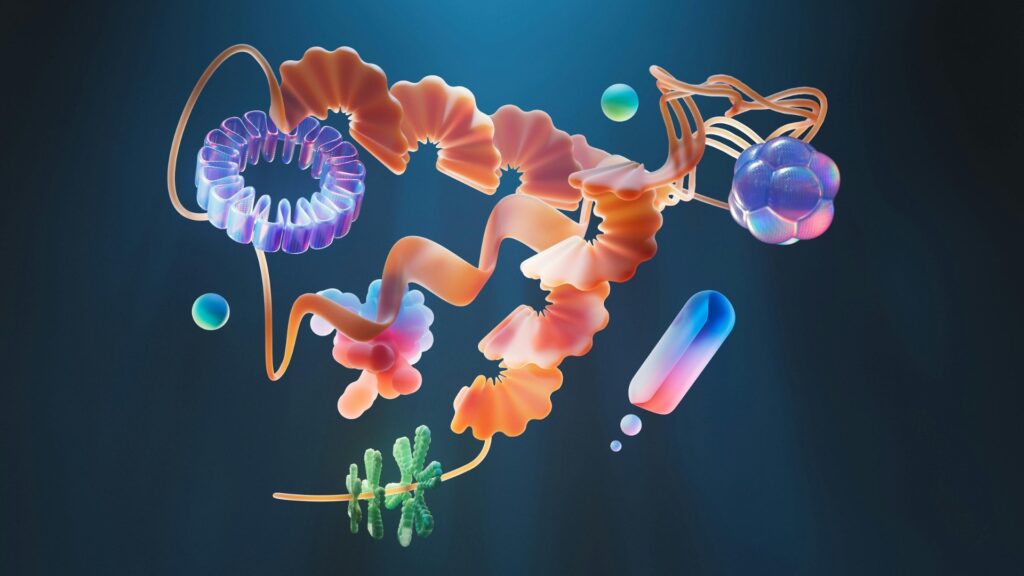
Similarity Search
From a molecule
to a decision map.
We identify plausible biological targets for your small molecules, map the available evidence, and distinguish solid signals from exploratory hypotheses. This solution is specifically designed for Research and Development departments in the Pharma and Biotech, Nutraceutical and Cosmetics sectors, for Contract Research Organizations (CROs), and for BD, Licensing & QA services.
THE PROBLEM
Many hypotheses, fragmented data
In the early stages of discovery, there are
many hypotheses and very few organised data.
Separating solid evidence from noise takes time
and expertise that aren’t always available in-house.

FRAGILE OR INDEFENSIBLE CLAIMS
Dossiers, pitches, grants. Every claim requires documented evidence. Without a structured map, you end up overestimating a molecule’s potential — or underestimating it.

TOO MUCH NOISE IN AVAILABLE DATA
ChEMBL, PubChem, GuideToPharmacology, and other public databases are rich but fragmented and heterogeneous sources. Finding the real signal requires methodology, not just data access.

POORLY ALLOCATED EXPERIMENTAL BUDGET
Without a solid biological rationale, experimental panels become broad and uninformative. You test on unsupported targets and burn capacity on assays that don’t answer the right question.
THE SOLUTION
Similarity-Based Target Intelligence
A consulting service that explores the chemical-pharmacological
neighbourhood of your molecules, identifies plausible biological targets,
maps the available evidence, and classifies each claim
on a scale from “direct evidence” to “exploratory hypothesis”,
producing outputs for scientific, industrial, and strategic decision-making.
“
Structurally similar molecules tend to share biological or pharmacological profiles. This is an established principle — but also one of the most misused when applied without methodological rigour.
”Key Features
Each component answers a precise question in the analysis process. The pipeline is multi-metric, auditable, and already validated on real client projects.

Target Inference
Identifies and ranks the most relevant biological targets from a seed molecule or set of molecules, with an explicit evidence level for each.

Chemical Neighbourhood Mapping
Maps the chemical-pharmacological neighbourhood: which molecules are similar to the seed, to what degree, and which targets they share. From this we infer biological plausibility.

Multimetric Similarity Scoring
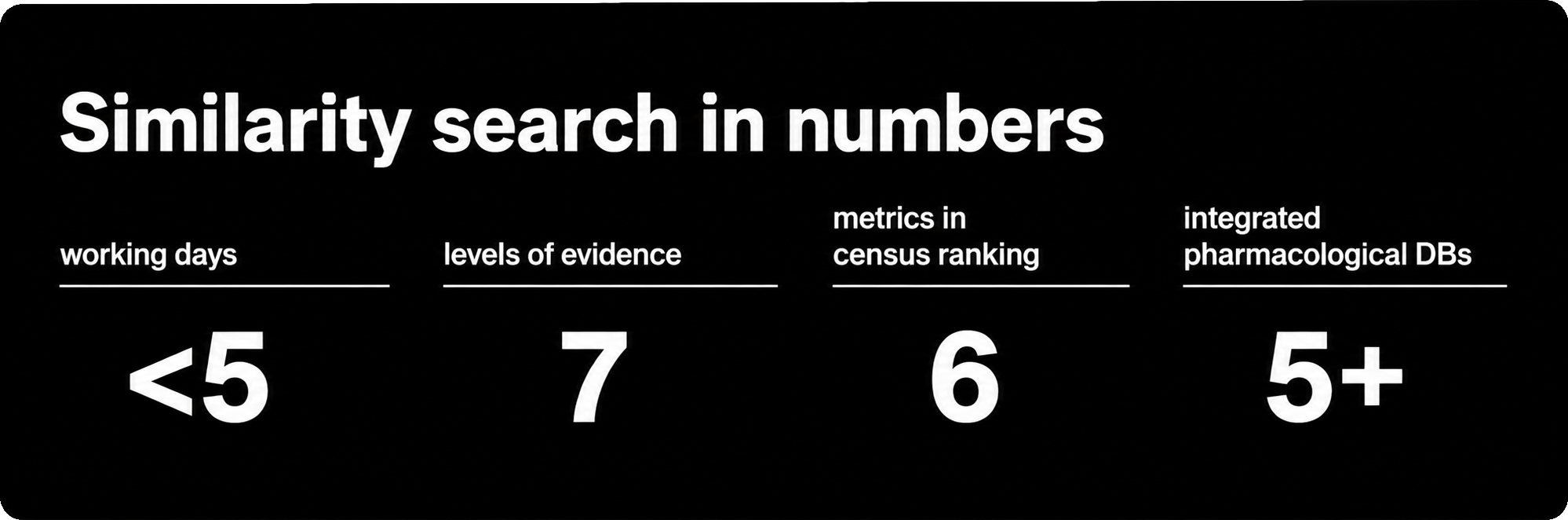
Six similarity metrics (MACCS + Morgan, with Tanimoto, Dice, and Cosine) aggregated into a consensus ranking. No fragility from a single-fingerprint approach.

Evidence Mapping
Each target is associated with available evidence: experimental activities, assays, annotated mechanisms, quantitative values (Ki, IC50, EC50, pChEMBL), and sources.

Receptor/Target Panel Verification
Provide a list of targets, receptors, or pathways of interest: we verify whether internal, indirect, weak, or absent signals exist for each.

External Corroboratio
Five external pharmacological databases (ChEMBL, PubChem, GuideToPharmacology, BindingDB, DrugCentral) to reinforce, contextualise, or downgrade hypotheses emerging from the chemical neighbourhood.

Conservative Claiming Layer
Every result is classified across 7 levels, from “direct evidence” to “no support”. Avoids overclaiming and makes every assertion traceable.

Client-Ready Reporting
The output is not a technical table to interpret independently. It’s a package readable by R&D, management, and BD: executive summary, charts, interactive dashboards, priorities, recommendations, and explicit methodological limitations.
The pipeline in 5 steps
From molecule to final report: a rigorous and traceable workflow.
1. Seed Resolution
We normalise the molecule from name, SMILES, InChIKey, PubChem CID, ChEMBL ID, or other identifiers.
2. Similarity Retrieval & Rescoring
We retrieve similar compounds from structured sources and rescore them using six metrics aggregated into a consensus.
3. Annotation & Aggregation
We integrate targets, activities, assays, mechanisms, and metadata from external pharmacological databases.
4. Prioritization & Verification
We classify each target into 7 interpretive buckets and verify the client’s panel of interest.
5. Report & Deliverable
Executive report, Excel workbook, audit CSV, static charts, interactive HTML dashboards, and operational recommendations.
Who uses this service

PHARMA &
BIOTECH

CRO
CONTRACT RESEARCH ORGANIZATION

NUTRACEUTICALS
& COSMETICS

BC, LICENSING
& QA
The advantages
Conservative Approach
Similarity does not automatically mean direct binding. The pipeline produces claims classified across 7 levels, not aggressive predictions. The result is scientifically more robust and more useful in real decisions.
Modular and Customisable
Single molecule, analogue series, library, or ongoing programme. The client can define the panel, therapeutic area, and scope of the analysis. The output adapts to the context.
Client-Ready Bundle
The result is a package readable by R&D, management, and BD, with summaries, charts, priorities, recommendations, and explicit methodological limitations. Not a table to interpret on your own.
Rapid Orientation
Kick-off within 24 hours of input confirmation. Delivery within one working week. Designed to help you quickly decide whether to invest in assays, preclinical development, IP, partnerships, or repositioning.
Possible applications

TARGET IDENTIFICATION
Identifies plausible biological targets associated with a molecule and reconstructs its target-oriented profile.

DRUG REPURPOSING & REPOSITIONING
Supports repurposing and repositioning activities with structured evidence on plausible new indications.

CANDIDATE COMPARISON
Compares candidate molecules within the same chemical class and identifies differences in their biological profile.

EXPERIMENTAL PRIORITISATION
Prioritises subsequent experiments by indicating which targets have a solid rationale and which are merely hypotheses to explore.
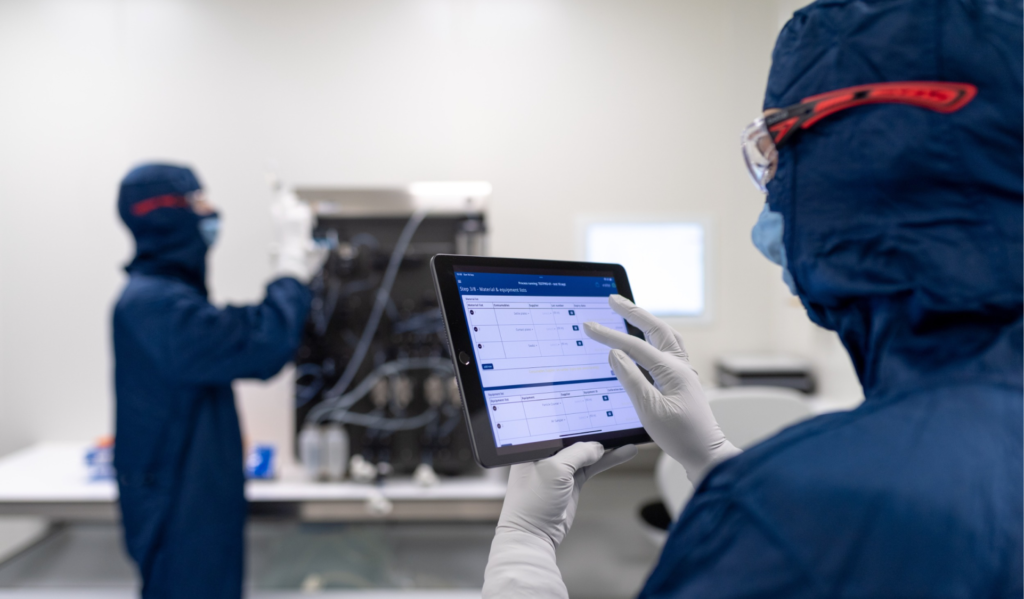
SCIENTIFIC-COMMERCIAL MATERIALS
Builds the documentary basis for dossiers, grants, partnerships, and business development with a defensible biological rationale.
Have a specific need?
The standard pipeline covers the majority of use cases. For some projects, a custom setup is possible: integrating an internal database, working on a structured series of analogues, or setting up a continuous programme across an asset portfolio.
Tell us about your project.

