Artificial Intelligence and the Chemical Industry: Kode’s Contribution to the 2026 Chemometrics Workshop
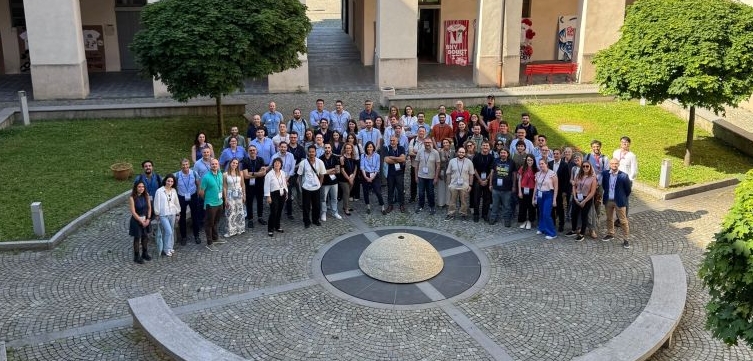
The 2026 Chemometrics Workshop, the annual event organized by the Italian Chemometrics Society (Società Italiana di Chemiometria) bringing together researchers, companies, and professionals engaged in applying statistical-mathematical methods to chemical data analysis, was held in Como from May 25 to 27. On this occasion, Marco Calderisi, CEO of Kode, and Alessio Sommovigo, Business Unit Manager of Kode Chemoinformatics, presented a talk titled “Chemical Industry and Artificial Intelligence,” offering a concrete overview of how data science and AI models are already transforming production and research processes in the chemical, pharmaceutical, and life science sectors.

A discipline expanding its boundaries
One of the recurring themes of the talk was observing how chemoinformatic techniques, originally developed to address very specific needs — molecular property prediction, drug design, ecotoxicological assessment — are now spreading into areas seemingly far removed from that original scope, such as quality control integrated with process control in industrial settings. The Kode Chemoinformatics Business Unit observes this evolution from a privileged vantage point: born alongside the scientific community (having contributed, among other things, to the development of VEGA, the QSAR model platform for ecotoxicological prediction that has become an international benchmark), it has over the years expanded its scope to include similarity search, target prediction, Design of Experiment, and multivariate analysis applied to pharmaceuticals, cosmetics, nutraceuticals, and industrial chemistry. This experience allows the team to recognize, even in highly diverse contexts, the cases where a chemoinformatic approach can deliver a real competitive advantage.
The real problem isn’t the technology, but the right question
During the talk, a small anecdote was mentioned, almost jokingly, drawn from a survey of a sample of Italian and French start-ups, in which a single closed-ended question had generated dozens of textual variants that were difficult to trace back to a single interpretation. It was not a serious example, but an effective one for introducing a very concrete problem: data quality remains an often underestimated prerequisite, and too many companies invest time and resources in digitalization and AI projects without first fully clarifying what problem they actually want to solve, ending up dissatisfied with solutions that are technically correct but poorly aligned with their real needs. As highlighted during the talk, the added value of data science comes precisely from the ability to understand a company’s specific challenge before choosing the tool, rather than starting from the technology and then looking for an application.
Five challenges, five different answers
Consistently with this approach, the talk presented five real-world cases, each built around a different need, starting with a first case related to pharmaceutical chemical research and ending with the use in industrial chemistry of AI-based tools that lie outside chemoinformatics, yet solve critical issues for those working with chemical compounds whose characteristics and risks must be known in order to perform their work safely.
A pharmaceutical research center interested in drug repurposing for an NSAID active ingredient needed to reduce manual literature searches. A similarity-search pipeline on ChEMBL and PubChem, with consensus rescoring across six metrics and a five-level classification of biological evidence, identified 150 structural analogs — 40% of them retrieved only by cross-referencing multiple sources — making it possible to prioritize just three candidates for further investigation.
In a center of excellence for acrylic resins, the challenge was different: speeding up the development of chemically sensitive formulations while reducing trial and error and physical prototyping. The Formana platform, built in three phases — data management, DoE/multivariate analysis, and an LLM virtual assistant — led to a 30% reduction in physical samples tested and recovered 150 person-days.
But chemoinformatics also plays a role in advanced quality control solutions. For a fertilizer manufacturer, the challenge was to replace part of the laboratory testing with continuous monitoring on the production line, without wasting laboratory time or product: through NIR spectra and dynamic MSPC models (formalized in SpectralizeR, Kode’s proprietary software), the system achieved very high accuracy (MAE between 0.06% and 0.17%) and is now operational in the plant.
This type of chemoinformatic analysis integrates with process control to enable immediate understanding of production defects and the interventions needed to maintain product standards and production efficiency. In a chemical company, the need was to digitalize procedures and achieve real-time control of the plant: the FactorAI solution (a framework created by Kode for Industry 5.0) acquires over 2,000 signals, calculates KPIs and correlations, and supports root-cause analysis, improving production efficiency.
The most advanced Artificial Intelligence solutions, although they may seem far removed from the chemical sector, become highly valuable when they address inefficiencies by intervening in repetitive manual processes characterized by significant time consumption and risk of error. For a company dealing with Safety Data Sheets, the challenge was the formal heterogeneity of documents that, while standardized by regulation, are difficult to process automatically: Kode developed SDS Reader for the compliance team. By integrating LLMs and computer vision, the software extracts all necessary data (such as ingredients and hazard pictograms), transforming this information into structured tabular data and eliminating manual transcription errors.
The common thread
Beyond the variety of applications — from plant control to document reading, from cosmetic formulation to molecular target research — the talk highlighted a common principle: in the chemical field, artificial intelligence does not replace domain expertise, but amplifies it, reducing analysis time, manual errors, and reliance on physical experimentation, while giving researchers more time for interpretation and decision-making.

